


Retiring or Living Part-Time in Puerto Vallarta: A Practical Real Estate Guide
Choosing a home that still works in twenty years: access, care, community and cost.
By Lance Fulford3 min read
Retiring to Puerto Vallarta, or spending the winters there, is a decision about your life before it is a property decision. The right home is the one that still works when you are 75 as well as 65: easy to reach, easy to look after, close to care and to the people you will rely on. This guide focuses on those practical questions.
Full-time or part of the year?
Many retirees start with part-time living. They spend the dry high season, roughly late autumn to spring, in Puerto Vallarta, and avoid the hot, humid, rainy summer. Part-time living lets you:
- test neighborhoods and routines before committing;
- keep ties, doctors and family at home;
- decide later whether to make the move permanent.
Renting for a full season before you buy is one of the best investments you can make.
Residency
To live in Mexico, rather than visit, you will need a residency visa. U.S. citizens usually apply at a Mexican consulate in the United States first, then finish the process with Mexico's National Migration Institute after arriving. Retirees often qualify through savings or pension income. Requirements are set in pesos and change, so check with the consulate where you will apply. For an example, see the Mexican Embassy in Washington's published guidance. Our relocation guide covers this in more detail.
Healthcare: plan it before you buy
Original Medicare usually does not cover care outside the U.S., apart from limited exceptions, according to Medicare.gov. Medigap policies may cover some emergency care abroad. In Puerto Vallarta, many retirees use private hospitals and specialists and carry private or international health insurance. Some residents also join Mexico's public system.
Questions to settle before you choose a home:
- How will you pay for routine and emergency care in Mexico?
- How will you get prescriptions?
- How far is the home from the hospital and clinics you would use?
- Will you keep coverage in the U.S. for trips home?
Choosing a home that ages well
Puerto Vallarta's most beautiful settings are often its steepest. Think about the next twenty years, not just the next two:
- Access. Hillside homes in Amapas, Conchas Chinas and Gringo Gulch can involve many stairs. An elevator building may matter more later.
- Walkability. In the Zona Romántica or Centro, you can live without a car. On the South Shore, you will drive.
- Single-level living and accessible bathrooms.
- Distance to medical care, pharmacies and groceries.
- Noise and quiet. Lively areas are wonderful for some retirees and tiring for others.
Compare the areas in our neighborhood guide.
Condo or house?
Many retirees choose condominiums. The association handles the building, security and common areas, and you can close the door and travel. Houses offer space and privacy but need staff, upkeep and someone to watch over them while you are away. Our condo buying guide explains how to judge a building's management and finances.
Owning a home in Mexico as a foreigner
Puerto Vallarta lies in Mexico's coastal restricted zone, so foreigners hold homes through a fideicomiso (bank trust). For retirees, one feature is especially valuable: you can name substitute beneficiaries in the trust, so the home passes to the people you choose. Ask a Mexican attorney whether a Mexican will is also advisable.
For the full buying process and closing costs, see Buying property in Puerto Vallarta as an American.
Running costs to budget for
- condominium fees, and any special assessments;
- annual property tax (predial), which local brokers describe as often a few hundred dollars a year;
- the annual bank-trust fee;
- utilities, especially summer air conditioning;
- insurance for the home and for health;
- property management or a caretaker while you are away.
Trusted local relationships
It pays to build a small circle of trusted professionals: an attorney, an accountant who understands both countries, a doctor, a property manager and a real estate advisor who knows the buildings. Put it in place before you need it.
Plan your next chapter
Lance Fulford works with clients moving between San Francisco and Puerto Vallarta, including those planning retirement on the bay. Start a conversation, or browse homes for sale in Puerto Vallarta.
General information only, not legal, immigration, medical, tax or financial advice. Confirm your situation with qualified professionals. Last reviewed October 2026.
Sources: Medicare.gov – Travel outside the U.S.; Embassy of Mexico, Washington – Temporary resident visa (2025); Secretaría de Relaciones Exteriores – Restricted-zone trust permit; Coldwell Banker La Costa – Cost to buy property in Puerto Vallarta. Accessed 23 October 2026.
A question about your own situation?
Lance is glad to talk it through, with no obligation.
Get in touch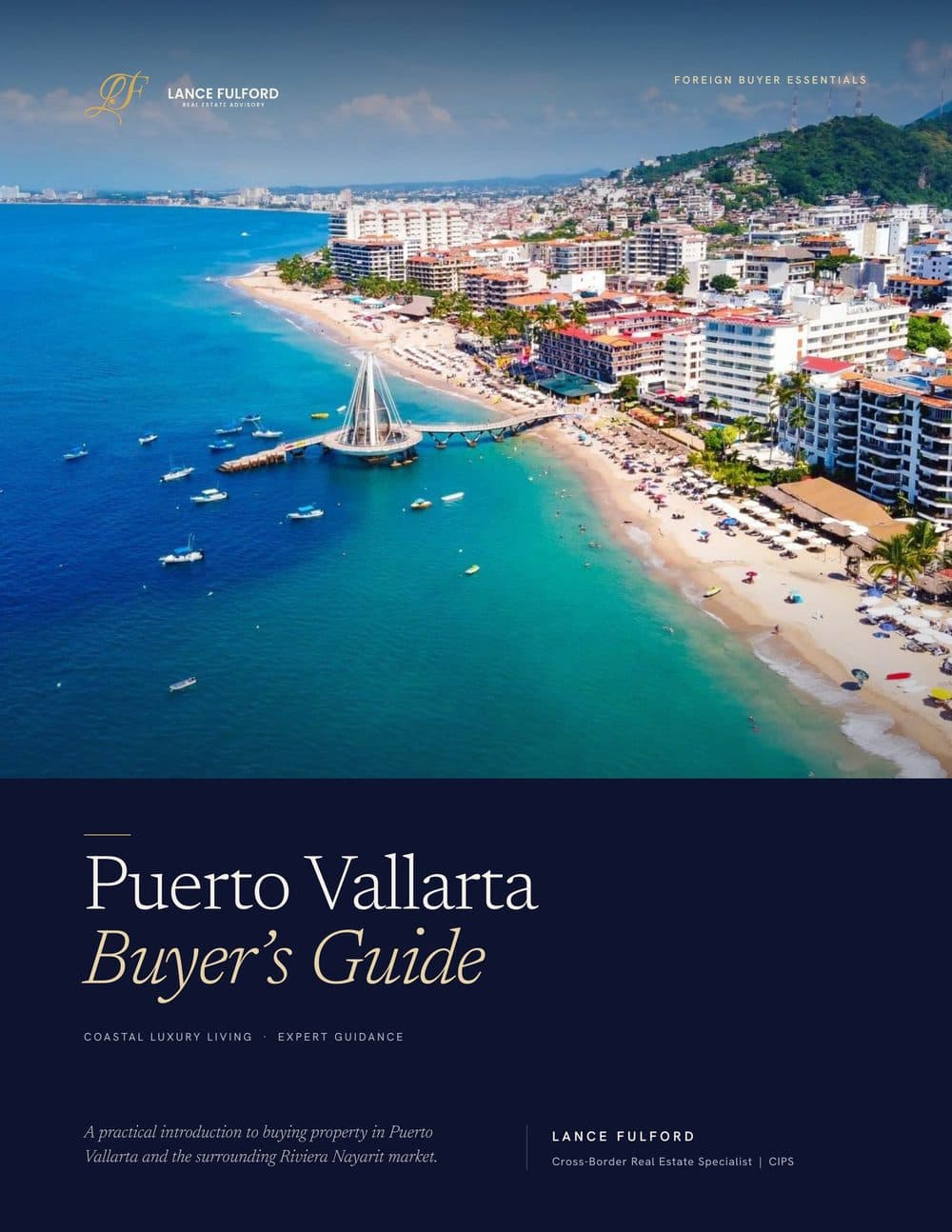
Free guide for cross-border buyers
The Puerto Vallarta Buyer’s Guide
Lance’s 16-page guide for U.S. and Canadian buyers: how ownership works, how a purchase comes together, and what to check before you commit.
- How foreigners own coastal property through a fideicomiso
- The buying process, from your brief to the keys
- Insurance, financing and moving funds safely
- Property types, neighborhoods and buyer checklists