


Buying Property in Puerto Vallarta as an American: A Complete Guide
The restricted zone, the bank trust, the notary and the real closing costs, in the order you'll meet them.
By Lance Fulford7 min read
Americans can, and do, buy homes in Puerto Vallarta, and the process is well established. But it is a different process from the one you know at home. The rules on foreign ownership, the role of the notary, how money moves and who checks the title all work differently in Mexico. This guide walks through each stage in order, so you know what to expect and which professionals to involve before you sign anything.
Can an American own property in Puerto Vallarta?
Yes. What changes is the legal structure you hold it through, not whether you can own it.
Article 27 of Mexico's Constitution creates a "restricted zone" covering land within 100 kilometres of the country's borders and 50 kilometres of its coastline. Foreigners cannot hold direct title to land inside that zone. Puerto Vallarta sits on the Pacific coast, so the whole city falls within it.
Mexico's Foreign Investment Law provides the solution. For residential property, a foreign buyer holds the home through a fideicomiso: a trust in which a Mexican bank holds legal title on your behalf and you, as beneficiary, keep the rights to use, rent, improve, sell or pass on the property. Under Article 11 of that law, the bank needs a permit from Mexico's Ministry of Foreign Affairs (the SRE) before it can take title as trustee. The SRE's own guidance gives itself five business days to decide on a permit, and allows a trust term of up to 50 years, renewable.
We explain the trust in detail in The fideicomiso, explained. The short version: it is a routine, well-tested structure, and it is the normal way foreigners own coastal homes in Mexico.
A second route, a Mexican corporation, exists for non-residential property. It is not a substitute for a fideicomiso if you are buying a home to live in.
The buying process, step by step
1. Decide where and what
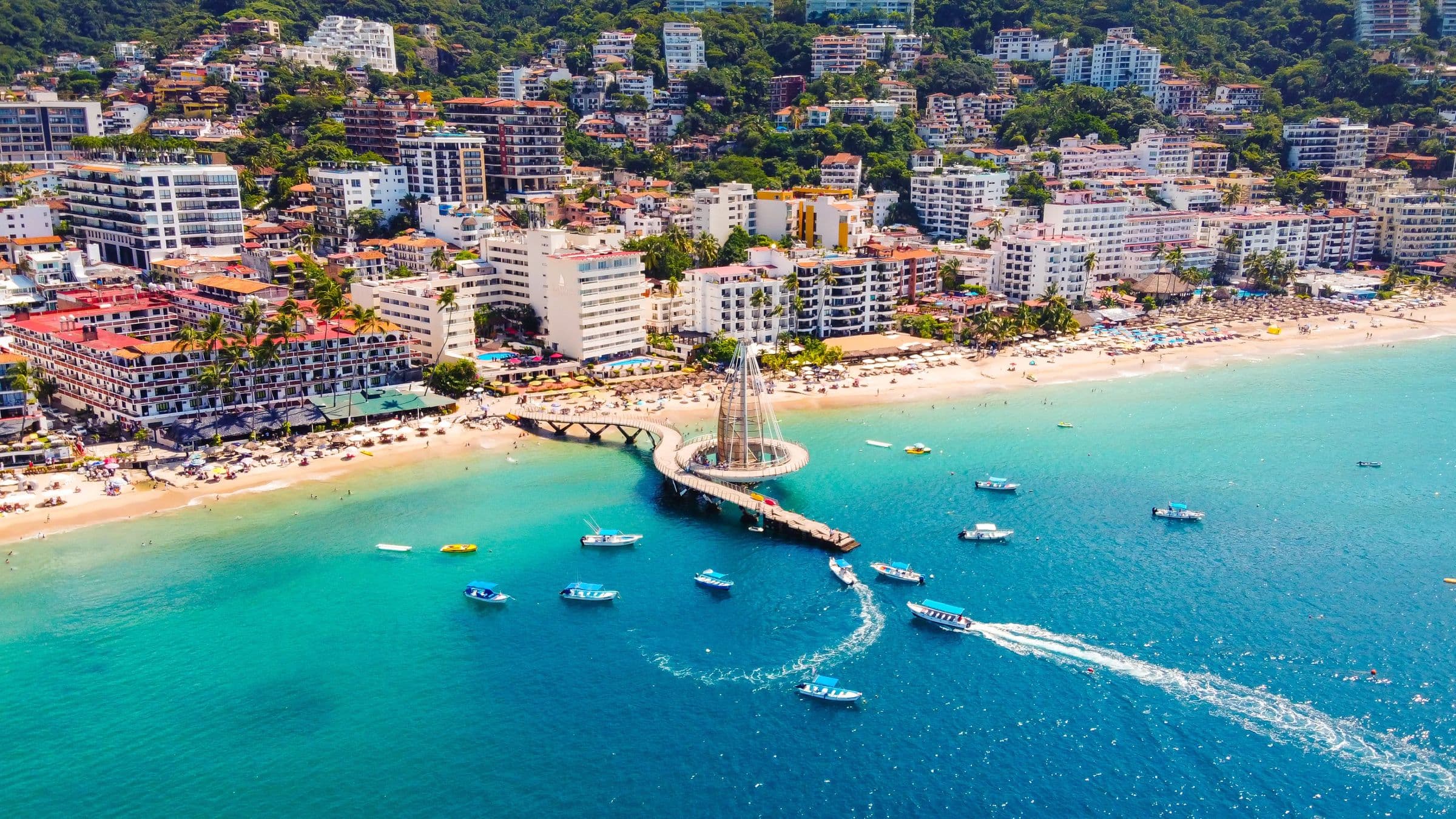
Puerto Vallarta is a collection of distinct neighborhoods, each with its own trade-offs. The Zona Romántica is walkable and lively; Amapas and Conchas Chinas trade some convenience for height, views and quiet; the South Shore is about privacy and the ocean; the Hotel Zone is high-rise living close to shopping and the airport. Our neighborhood guide compares them side by side, and you can browse current homes on the Puerto Vallarta page.
2. Assemble your team before you make an offer
A mistake worth avoiding is bringing professionals in too late. Before you sign a purchase agreement, you should know:
- Your real estate advisor. Mexico has no single MLS covering every listing, and agent licensing works differently from California. AMPI (the Asociación Mexicana de Profesionales Inmobiliarios), which the National Association of Realtors describes as the Mexican equivalent of NAR, keeps a member directory.
- An independent Mexican real estate attorney, working for you, to review the contract, the title history and the condominium documents.
- The notario público (see below), usually chosen by the buyer.
- An escrow company to hold your deposit and purchase funds until closing conditions are met.
- A building inspector, and for condominiums, someone to review the association's finances.
3. Make an offer and sign a purchase agreement
Offers are usually written in a bilingual purchase agreement (a contrato de promesa de compraventa or similar) that sets the price, deposit, closing date, contingencies and who pays which costs. Have your attorney review it before you sign. Ask specifically about inspection and financing contingencies, what happens to the deposit if the seller cannot deliver clean title, and the currency of payment.
4. Deposit into escrow
MLSVallarta, the local multiple-listing association, recommends escrow for all transactions. A neutral escrow company holds your deposit, and later the balance, until the notary confirms that everything is in order. Do not wire a deposit directly to a seller.
5. Due diligence
This is where your attorney and the notary earn their fees. Before closing, the notary typically requests:
- a certificate of no liens (certificado de libertad de gravámenes) from the Public Property Registry;
- statements showing that property tax (predial), water and condominium fees are paid up to date;
- an appraisal (avalúo) for tax purposes.
For a condominium, also request the building's regime documents, rules, budget, reserve position and recent meeting minutes. Our Puerto Vallarta condo buying guide covers what to look for.
6. The bank trust and SRE permit
Once you have chosen a trustee bank, it applies for the SRE permit through the ministry's electronic system. You will provide identification and name your beneficiaries. Naming substitute beneficiaries at this stage is one of the simplest pieces of estate planning available to you, so think about it before you sign.
7. Closing at the notary
A Mexican notario público is not the same as a U.S. notary public. The notary is a highly qualified lawyer appointed by the state, responsible for the legality of the transaction. The notary drafts the deed (escritura), confirms identities and title, calculates and collects the transfer taxes, and records the deed in the Public Property Registry. Everyone signs the deed in the notary's office, or through a power of attorney if you cannot be there. Escrow then releases the funds.
8. After closing
Expect the recorded deed some time after closing, not on the day. In the meantime, set up utilities, the annual predial payment and condominium fees, and keep your trust documents somewhere safe. If you plan to rent the home out, speak to an accountant about Mexican and U.S. tax reporting before your first guest arrives.
What does it cost to buy?
Closing costs in Mexico are generally paid by the buyer and are higher than many Americans expect. They are calculated on the highest of the price, the official appraisal and the assessed value. As a planning range:
- Acquisition tax: each state sets its own rate. MLSVallarta puts the range across Mexico at 1–4% of the tax value. Local brokerage guidance for Puerto Vallarta, Jalisco, cites roughly 2%.
- Notary fees and expenses: local guidance suggests about 1–1.5% of the price.
- Bank trust: a one-time setup fee (local estimates run about US$1,500–2,500, including the SRE permit) and an annual trustee fee (about US$600–800).
- Appraisal, certificates and registration: typically a few hundred dollars each.
Taken together, local brokers commonly estimate total buyer closing costs at around 5–8% of the purchase price. Treat these figures as a budget guide only. Your notary will give you an exact closing statement for your property.
Paying for the property
Many foreign buyers in Puerto Vallarta pay cash, or use funds raised at home (for example, a home-equity line on a U.S. property). Cross-border mortgages exist but are less common and usually carry stricter terms. Plan how you will move money early. Large international wires take time, and your escrow company will have its own verification steps.
U.S. tax points to raise with your advisor
Owning a home in Mexico creates paperwork in both countries. Two points come up often:
- In Revenue Ruling 2013-14, the IRS concluded that a Mexican land trust used simply to hold title to property is not treated as a trust for the purposes of U.S. foreign-trust reporting. Attorneys note the ruling's scope is limited, so confirm how it applies to your arrangement.
- Rental income from a Mexican property is generally taxable in Mexico, and U.S. citizens must also report it to the IRS, where foreign tax credits may apply.
A cross-border tax professional can confirm what applies to you.
Five mistakes worth avoiding
- Sending money before escrow is in place. Your funds should only ever move to a neutral escrow account.
- Relying on the seller's lawyer. Engage your own attorney.
- Skipping the condominium review. In a condo, the association's finances are part of what you buy.
- Underestimating closing costs. Budget 5–8% on top of the price until the notary says otherwise.
- Ignoring estate planning. Name substitute beneficiaries in the trust, and ask a Mexican attorney whether you also need a Mexican will.
Thinking about buying?
If you are weighing a purchase in Puerto Vallarta, talk to Lance. He can explain the local process, introduce you to independent legal and escrow professionals, and show you homes that fit how you plan to use them. Current listings are on the Puerto Vallarta properties page.
General information only, not legal, tax or financial advice. Rules and costs change, so confirm the details with a Mexican attorney, the notary and a cross-border tax professional before you buy. Last reviewed October 2026.
Sources: Secretaría de Relaciones Exteriores – Permit for a trust in the restricted zone; Ley de Inversión Extranjera, Article 11; MLSVallarta – Buying real estate in Mexico; Coldwell Banker La Costa – Cost to buy property in Puerto Vallarta; National Association of Realtors – Doing business with Mexico; Freeman Law – Tax implications of buying in coastal Mexico. Accessed 23 October 2026.
A question about your own situation?
Lance is glad to talk it through, with no obligation.
Get in touch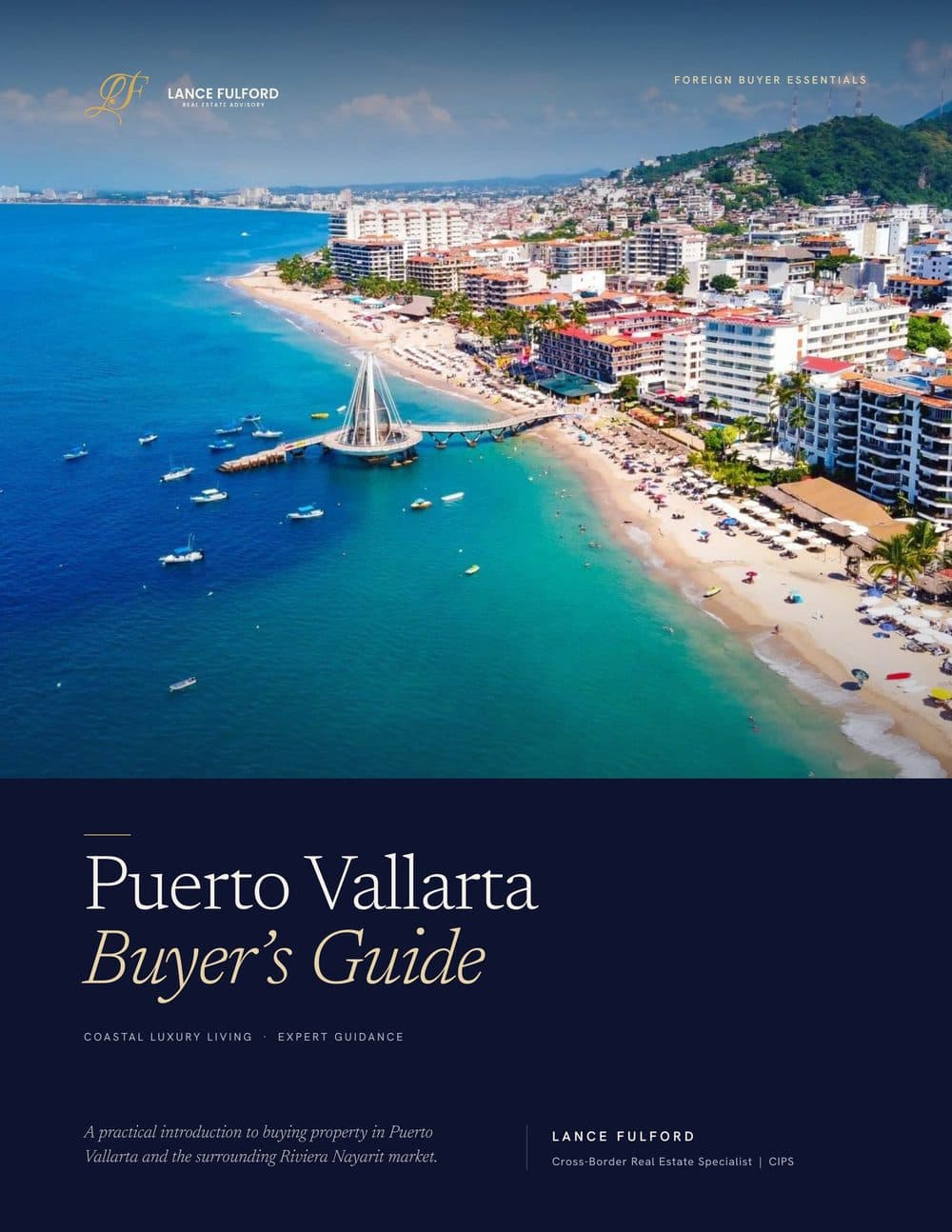
Free guide for cross-border buyers
The Puerto Vallarta Buyer’s Guide
Lance’s 16-page guide for U.S. and Canadian buyers: how ownership works, how a purchase comes together, and what to check before you commit.
- How foreigners own coastal property through a fideicomiso
- The buying process, from your brief to the keys
- Insurance, financing and moving funds safely
- Property types, neighborhoods and buyer checklists