



Puerto Vallarta Closing Costs: What Foreign Buyers Actually Pay
The acquisition tax, notary, registry and trust costs, with worked examples.
By Lance Fulford6 min read
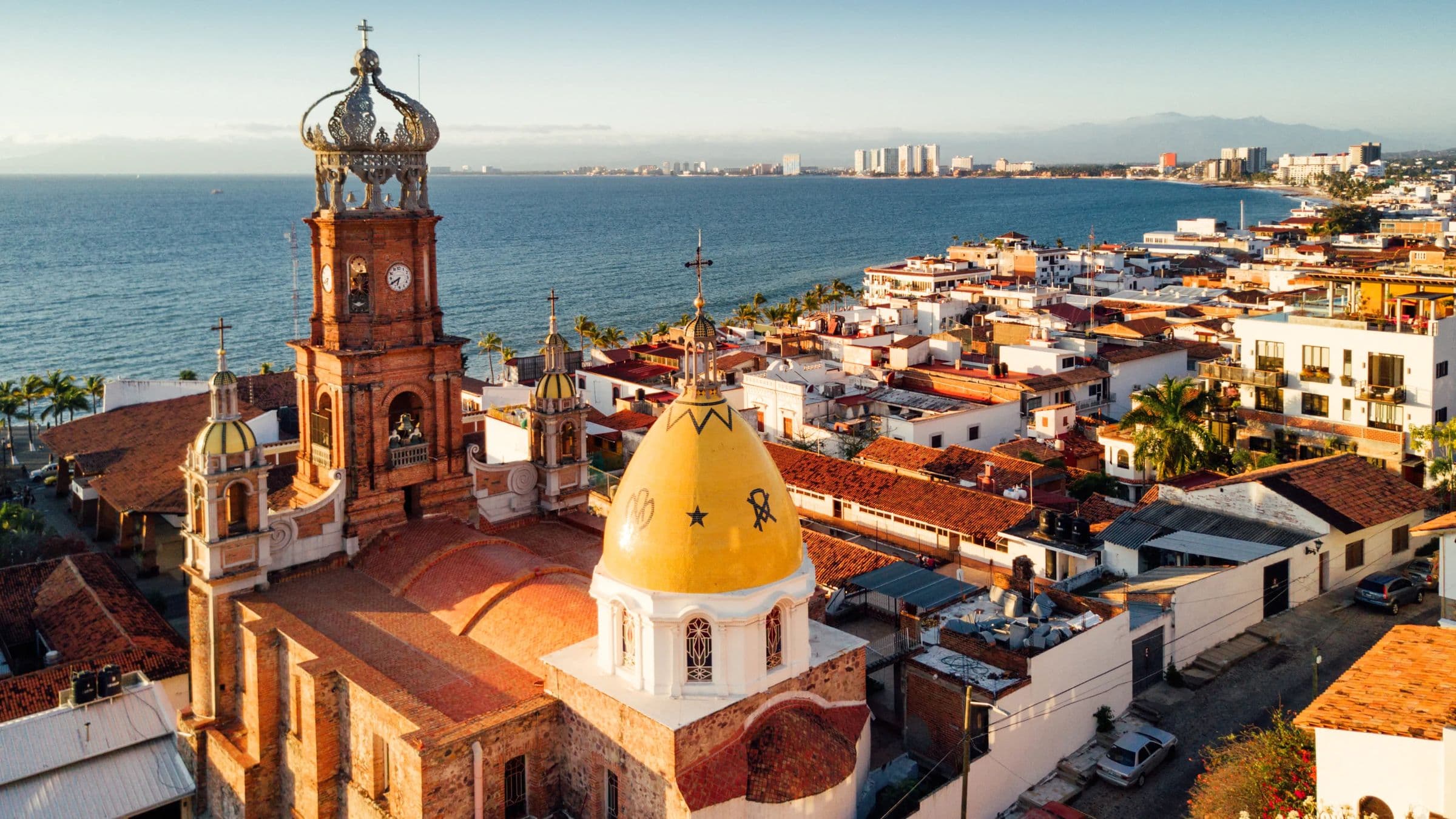
When you buy property in Puerto Vallarta, the closing costs are paid on top of the price, and they are higher than most North American buyers expect. Local brokers commonly estimate the total at roughly 5% to 8% of the purchase price for a foreign buyer, with the percentage toward the higher end on less expensive homes because some costs are fixed. The largest single item is the municipal acquisition tax, which in Puerto Vallarta runs from 2.65% to 3.55% under the city’s 2026 tax schedule, more than the “about 2%” often quoted.
This guide explains each cost, separates what is set by law from what is an estimate, and shows how to get a reliable number for the property you are buying.
First, two things that change the numbers
- Which state you are buying in. Puerto Vallarta is in the state of Jalisco. Nuevo Vallarta, Bucerías and the Riviera Nayarit, just across the Ameca River, are in Nayarit, with different municipal taxes and fees. Many online guides blur the two.
- Whether you need a bank trust. Puerto Vallarta lies within Mexico’s coastal restricted zone, so foreign buyers typically hold residential property through a bank trust called a fideicomiso. Setting one up adds costs that a Mexican buyer wouldn’t pay.
Puerto Vallarta closing costs at a glance
| Cost | Who sets it | Typical amount |
|---|---|---|
| Acquisition tax (Impuesto sobre Transmisiones Patrimoniales) | Fixed by the Puerto Vallarta municipal revenue law | 2.65% to 3.55% marginal rates; about 2.95% to 3.3% in total on typical residential prices |
| Notary (notario público) fees | The notary, within the state tariff | Estimated at about 1% to 1.5% by local brokers |
| Public registry, certificates and official appraisal | State and municipal fees, plus the appraiser | Estimated at about 0.5% to 1% |
| Bank trust (fideicomiso) setup and federal permit | The trustee bank, plus a federal fee | Brokers cite roughly US$2,000 to US$3,000 and up |
| Legal review, translation, closing agent | Your own advisors | Varies; agree it in writing |
Total buyer closing costs: estimated by local brokers at roughly 5% to 8% of the price. Your notary’s written estimate is the only binding figure.
1. The acquisition tax: the biggest line
Every buyer pays the municipal property acquisition tax when title changes hands. In Puerto Vallarta, the rate isn’t flat. The municipal revenue law sets a progressive schedule in pesos, with a fixed amount plus a marginal rate on the value above each threshold. The marginal rates start at 2.65% and rise in steps to 3.55% for the highest values.
The tax base is the higher of two values: the price stated in the transfer, or the official appraisal approved by the municipal land registry (Catastro). Because the official appraisal can come in above the price, your tax can be based on more than you paid.
Worked examples (2026 schedule)
| Taxable value (MXN) | Acquisition tax (MXN) | Effective rate |
|---|---|---|
| 5,000,000 | 147,730 | 2.95% |
| 10,000,000 | 308,670 | 3.09% |
| 20,000,000 | 640,527 | 3.20% |
| 40,000,000 | 1,310,527 | 3.28% |
These are examples calculated from the published schedule, not a quote. Thresholds are in pesos and are revised each year, so the tax on a dollar-priced home also moves with the exchange rate. Your notary calculates the final amount.
2. Notary fees
In Mexico, the notario público is a senior, state-appointed lawyer who verifies title, confirms the property is free of liens and tax debts, calculates and collects the taxes, prepares the deed and registers it. The notary works for the transaction, not for either side. Fees are set within the state’s official tariff; local brokers commonly estimate them at about 1% to 1.5% of the price. Ask for an itemized estimate early.
3. Registry fees, certificates and the official appraisal
Before closing, the notary obtains:
- a certificate of no liens (certificado de libertad de gravamen) from the Public Registry of Property;
- confirmation that property tax (predial) and water are paid up;
- an official appraisal (avalúo), which also feeds the acquisition tax base.
After closing, the deed is recorded in the Public Registry. Together, these are commonly estimated at about 0.5% to 1% of the price.
4. Bank trust (fideicomiso) and federal permit
If you are buying as a foreigner in the restricted zone, a Mexican bank acts as trustee and holds title for your benefit. Setting up the trust involves the bank’s acceptance fee, the first year’s administration fee and a permit from the Ministry of Foreign Affairs (SRE). Local brokers cite figures from about US$2,000 up to US$3,000 and more for setup, and an annual trust fee of roughly US$500 to US$800. Fees vary by bank, so compare quotes.
If you are buying a property that already sits in a trust, you may be able to take over the existing fideicomiso instead of creating a new one. Ask whether that is possible and what it costs.
5. Legal review and other costs
Many buyers hire their own bilingual attorney or closing coordinator, separate from the notary, to review the documents and manage the timeline. Also budget for:
- wire transfer and exchange costs;
- translation, if you need documents in English;
- an independent property inspection;
- the condominium’s certificate that dues are paid, for condo purchases.
What the seller pays
Sellers generally pay the real estate commission and any capital gains tax due, which the notary calculates and withholds at closing. Who pays what can be negotiated, so confirm it in your offer.
After closing: annual costs to budget
- Property tax (predial): paid to the municipality each year, and generally modest by U.S. standards.
- Annual trust fee: paid to the trustee bank, as above.
- Condominium dues (HOA): set by each building; ask for the budget, reserves and minutes.
- Insurance and utilities.
How to get a reliable number
- Choose your notary early and ask for a written, itemized closing cost estimate for your specific property and price.
- Ask the trustee bank for its fideicomiso fee schedule.
- Agree in writing who pays each cost.
- Keep 2% to 3% of the price in reserve for exchange-rate movement and surprises.
For the full buying process, read Buying property in Puerto Vallarta as an American and the Puerto Vallarta condo buying guide, or browse Lance’s Puerto Vallarta listings.
Frequently asked questions
How much are closing costs in Puerto Vallarta?
Local brokers commonly estimate total buyer closing costs at about 5% to 8% of the price for a foreign buyer. The municipal acquisition tax alone is 2.65% to 3.55% in marginal rates, roughly 3% in total on typical home prices.
What is the acquisition tax in Puerto Vallarta?
The Impuesto sobre Transmisiones Patrimoniales is a progressive municipal tax with marginal rates from 2.65% to 3.55% under the 2026 schedule. It is charged on the higher of the transaction price and the official appraisal.
Do foreigners pay more closing costs in Puerto Vallarta?
Foreign buyers in the coastal restricted zone usually pay for a bank trust (fideicomiso) and a federal permit, which a Mexican buyer wouldn’t need. The taxes themselves are the same.
Who pays closing costs, the buyer or the seller?
The buyer usually pays the acquisition tax, notary, registry and trust costs. The seller usually pays the commission and any capital gains tax. Terms can be negotiated.
Are closing costs the same in Nuevo Vallarta?
No. Nuevo Vallarta and the Riviera Nayarit are in the state of Nayarit, with different municipal taxes and fees. Get a local estimate for the specific property.
Planning a purchase?
Ask Lance about the buying process and what to budget for a specific property. Send Lance a message, or get his free buyer’s guide, Buying Well in Puerto Vallarta.
General information only, not legal, tax or financial advice. Tax schedules are revised every year and fees vary by notary and bank; your notary’s written estimate is the binding figure. Broker estimates are quoted as published by their authors. Last reviewed November 2026.
Sources: Colegio de Notarios del Estado de Jalisco, Breviario de Leyes de Ingresos 2026 (Puerto Vallarta, Art. 41); Congreso del Estado de Jalisco, Ley de Ingresos del Municipio de Puerto Vallarta 2026; Coldwell Banker La Costa, closing cost estimates (July 2026); Mexico News Daily, The real costs of buying a home in Mexico. Accessed 1 November 2026.
A question about your own situation?
Lance is glad to talk it through, with no obligation.
Get in touch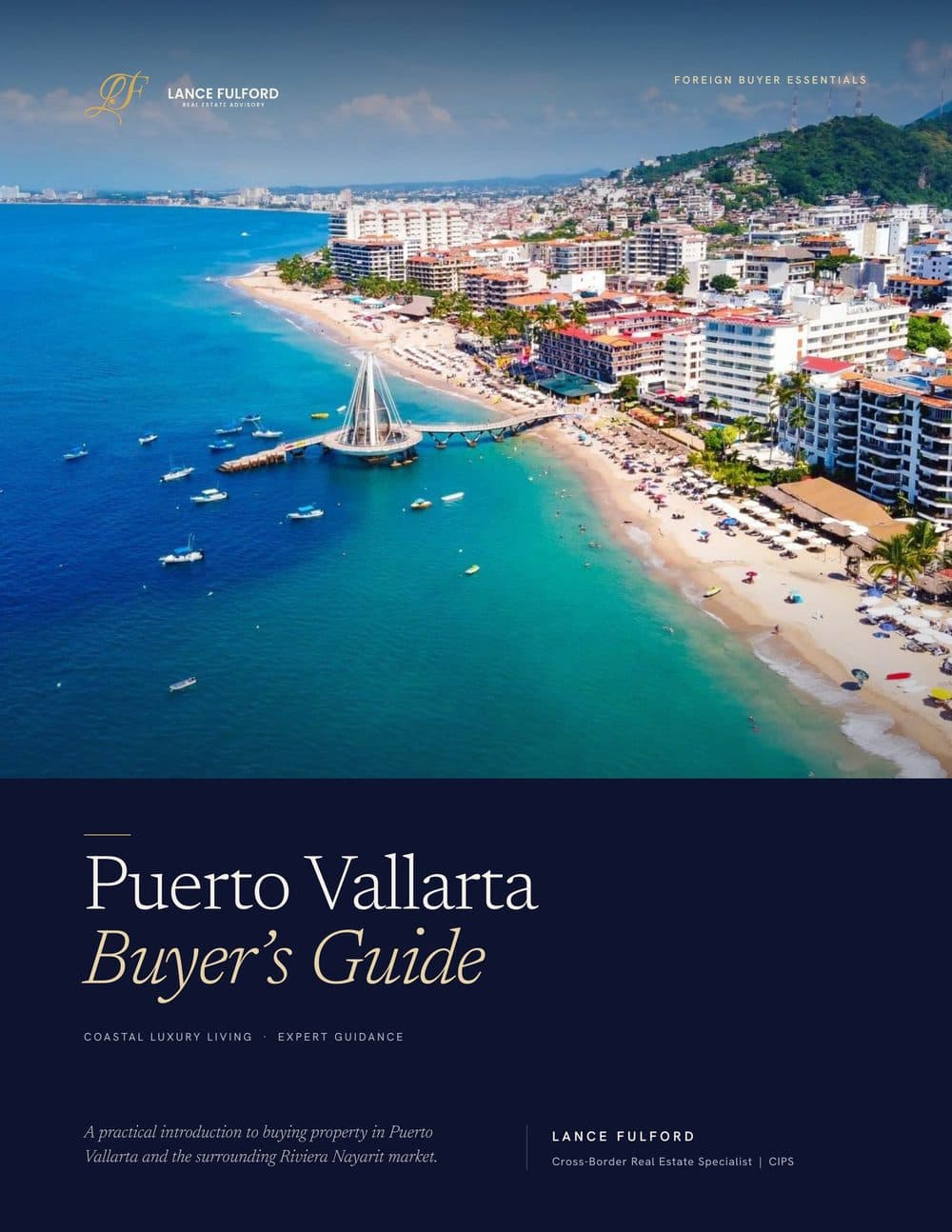
Free guide for cross-border buyers
The Puerto Vallarta Buyer’s Guide
Lance’s 16-page guide for U.S. and Canadian buyers: how ownership works, how a purchase comes together, and what to check before you commit.
- How foreigners own coastal property through a fideicomiso
- The buying process, from your brief to the keys
- Insurance, financing and moving funds safely
- Property types, neighborhoods and buyer checklists